Saturday, August 7, 2010

Prep the Patient with Alcohol


What do you do when a scabby fist lodges itself behind your sternum?  When the fingers of that fist begin to lengthen and swell even when there's no space, none, but those fingers - with claws for nails; coarse and cracked - when those spreading fingers with rough nails keep expanding when there's no margin for expansion, when the sternum, usually so hard, so protective, when the sternum is going to splinter, then burst, when you can't breathe because there's no room for air in your lungs, when that fist is going to open, no matter what--

Stay seated on the couch with your three-year-old.  Your daughter who should be asleep but who's up, happy for a little extra Mommy-time without the distracting competitions of her older sister.  Sit there and look down at her sleepy face, so peaceful, until she looks at you and screws up her little three-year-old features, looks up at you and says, "What's the matter, Daddy?  What's wrong?"

Then isn't the time to disregard the voice of your wife as she offers any number of solutions.  "We can call the Andersons," she says. Or:  "Cassandra is traveling, but Natasha's home - she could get Harry to sleep on the couch while we drove to the hospital.  I'm sure of that."  Or:  "No, you can't go to Alameda Hospital.  Your insurance just switched over on the first, August first, right?  Kaiser's it.  Let me figure out where we need to go."

Then isn't the time to decide that you really should shower before hitting the E.R.  And brush your teeth.  Shave.  Krissy, though, she shaved her legs when she went into labor with Matthew, right?  It would make perfect sense to do these things, to attend to these ablutions, if it wasn't for that fucking fist that was so close to punching through the wall of your chest.

So instead you look at Kristina, at her beautiful little face.  She never snuggles like this, not when Mom is so close.

There are things to do, so many things.  Karen, she was a bit unobservant there at the beginning, but she's on it now.  You're not going to poke fun of her in the years ahead - you've got years ahead, Kristina needs you to have years ahead; Elizabeth too, Elizabeth asleep, upstairs, she's not even going to get a goodbye hug - so you won't poke fun of Karen like you've done for twenty years, twenty years ago now when she wouldn't immediately hop out of bed and drive you to the hospital.

That was a bad summer that started so good. You'd just gotten married, but then the tumor in your esophagus, necessitating an ugly surgery, a lateral thoracotomy, and then weeks of recovery after they cut you in half.  That's what "lateral thoracotomy" means.  It's Latin for "they cut you in half and use the Jaws of Life on your ribcage and then staple you back together after they finish messing about."

And as far as being a patient?  You suck, just suck.  Hadn't Karen done everything?  Stayed with you at the hospital - for how many days?  Often past midnight, then you calling before six in the morning.  "My comb," you'd say, "I need it."  And:  "When are you coming back?"  So stop the jokes about her not jumping up that second and driving you to the hospital.  The second time that summer.  Not a tumor this go around.  This time, your gallbladder shut down.  Yeah it hurt.  Big deal.  You were a sissy about it then, don't be a sissy now.

It didn't hurt like this, though.  Not like that fist was about to explode like a grenade from the inside.  You thought the gallbladder hurt - but this?  This is what hurt feels like.


The nurse looks at me funny when I tell her I drove myself.  I don't tell her about Karen and all her solutions, my urge to shower.  I'm focused on the second occasion of the "incident."  She calls it that first, this blonde nurse in blue scrubs, but they'll all call it that in the next twenty hours there at Kaiser.

The Incident.

The Incident was three, all wrapped in one.  First there on the couch, at about 9 p.m.  Then about an hour later, that time with Kristina next to me.  The pins and needles in my left hand.  That was the Incident that made me forget about taking a shower, and got me into my car alone.  Then the third, after the blonde in blue told me to take a seat, and I did, sat there by the entrance, by the metal detector I had to go through because this is Oakland - the detector that alarmed even after I set out my keys and my sterling cigarette holder-cum-wallet and the random change from my pockets, set all that in the plastic tub by the gate - I alarmed the detector even then because my belt buckle is metal, and large enough, and so the game warden there at the entrance, she had to wand me, find the buckle and only that buckle before she waved me through.

So that third time I sat there by the alarming gate and I got quiet, and tried to breathe, and closed my eyes because the fist was back, larger and hotter than before, so I closed my eyes and breathed all shallow, breathebreathebreathe, and that's when the blonde took notice - took notice of my closed eyes, my short breaths, breathebreathebreathe - took notice and grabbed my arm and led me to the back, to the doctors, through some swinging doors to the doctors.

Bridget's beautiful.  She's the nurse taking care of me.  I don't get a really good look at her.  I feel like there's a lot of blue in the ER.  Nurse scrubs and walls and gurneys.  What I remember of Bridget are the crazypretty silver earrings swinging from her ears, the silver shiny against her coffeeblack skin.  She's talking to Marcos, this tatted dude who might be a paramedic.  They're chatting about needles and what gauge they're going to stick me with - 20, 18, or 16.  "The funny thing about needle gauges," he's talking to me, "is that they're the exact same for stereo speakers.  So now you know that," he says.

Beautiful Bridget straightens my arm, "Wow, look at that vein.  We could do a 16 in there.  You want to do a 16?"  "I'll do a 16," Marcos says.  "That's good bragging rights."  But it doesn't work out that way.  He tells me there's going to be a stick, and there is, but then he's digging around inside my arm with his 16 gauge, and I'm thinking the smaller the number the bigger the needle, and then he's saying, "I blew that vein out.  Just blew it."  So Bridget takes over, starts swabbing the back of my hand with alcohol, says she's going to do it, nothing fancy, just a 20 gauge to get it in, stick me just a little.

She does stick me, and my blood squirts, I get her shirt pretty good, and it's wet on my hand, my hand's wet with blood and Bridget's apologizing, getting it clamped off down there, and then they're moving me to Room 12.

Outside of 12 there's a print by Ansel Adams, big and black-and-white, of a tree covered in snow, three main branches coming off the trunk, all listing to the left, blanketed in white, and I think it's there to warn you how cold the room's going to be.  The blanket they gave me came out of an oven, that's what it feels like, warm, almost hot, but the blanket will keep that warmth for just a few minutes inside the room.  I'm looking down at my feet, my feet in blue socks sticking out from under the white blanket.

The room's got a plexi holder on the wall inside the door, lots of slots for lots of forms:  Surgical Checklist, Valuables Checklist, Tetanus Consent Form, Lab Slips, Surgical Consent Form.  They don't worry much about those for me, just wheel me on the gurney tightly through the small room, past the big red biohazard wastebasket and the blue gloves in another plexi holder on the wall.

Bridget slicks back a beige curtain and Marcos parks me against the wall and all I can do is focus on the mismatched acoustical tiles in the ceiling as Bridget tosses two plastic sacks onto the counter, one holding my shoes and pants, the other holding my rolled-up blazer.

This is home for the next 19 hours.

As soon as I'm parked, this dude pushing around a mobile x-ray machine stops and looks in.  "Why dint you tell me you needed a chest done?" he says to Bridget.  "I called out," she says.  "You gotta use my name," he says back.  "I said 'Hey,'" she says.  "'Hey' ain't gonna do it," he says back to her.  "You gots to use my name."  Bridget laughs.  "I am going to get you later," she says.  "I want you to get me later," he says back, "so I'm gonna run slow."

And this time they both laugh.

The dude maneuvers the machine into 12.  "You had an Incident, huh?" he says, and then he shoots my chest and leaves.  A lot of nurses and techs come into 12 and then leave.  Like the nurse that slaps a Nitroglycerin patch onto my chest.  Then the other one who has me dry-swallow two tabs of some children's aspirin because the nitro can give you a bitch of a headache.  Or Marcos again trying to get me hooked up for an EKG.

It doesn't help that I have a hairy chest.  I'm Greek, ok?  Five of the connections work, but not the sixth.  He rips that one off, taking a mat of black hair with the connection, unsuccessfully sticks another one on me with Bridget watching.  Just watching.

Until Bridget tells him she'll do it, kind of like she took over with the needle, and so she asks if she can shave my chest a little to get down to skin.  I tell her I'm not going to be on any calendars anytime soon, so shave away.

I need another blood test and a stress test on a treadmill and my temperature needs taking and my lungs listened to and I should focus, but now focus is hard.

Karen calls at 12:06 a.m.  Gets an update, wonders if I'll be able to sleep.  As she says that, the blood pressure cuff tightens hard on my arm.  The cuff goes off every 15 minutes.  I have to wait six hours before they can take more blood.  So that means the cuff will go off, loud and hard, 24 times between now and 6:15.

I'm thinking no sleep.

But I've got clean oxygen pumping into my nose, nitro on my chest, the cuff on my bicep, something attached to my flip-you-off finger, a 20 gauge needle stuck into the back of my other hand in case they need to pump fluids into me before they use it to draw more blood - more blood in approximately 24 blood pressure checks from now.

I tell Karen my phone's about dead, so I'll be incommunicado.  Bye and I love you.

A nurse kills the lights.  And the little doohickey clamped to my flip-finger glows red, and that red matches the sign out in the hallway next to Ansel Adams, the red a circle and slash - the slash through a lit cigarette, the sign announcing, "No Smoking Oxygen in Use."  So I breathe some of that O2, no sense letting it go to waste.

Another nurse around 2:30 a.m. and I'm complaining about the nitro-headache I've got drumming, and she asks if I'd like her to remove the patch, and I'm not lucid enough to think "more aspirin please," I'm just thinking Billy Joel, right?  And I'd rather deal with a headache than a heart attack-ackackackackack.

Sometime after 3 a.m. and an alarm goes off in 12.  A nurse rushes in, she looks like a rockstar.  Maybe in the light of day the nurses wouldn't look like rockstars, not all of them, but in the middle of the night?  When you think you're dying and they rush in to attend to an alarm in 12?  They could all be on General Hospital.  No problem.  She tells me the alarm indicates that I'm not breathing.  Then she smiles a rockstar smile and says, "But I can see you are."  She kills the alarm and goes off for her closeup.

4:30 a.m. and another alarm.  A different rockstar comes in and I ask if the machine says I'm not breathing again.  Rockstar smile and she says, "It does.  But you are."  And a laugh.  "This unit," she says, "it's not very sensitive."  And all I can think is, this unit?  This unit that's monitoring my breathing?  Wow.

There's no Stress Test for me in the morning.  The test is still needed, but the treadmill isn't available until four in the afternoon.  There's Karen in the morning, though.  Happy with her coffee, and a present for me - the charger for my phone.  I can rest with Karen there.  I feel stupid that she's blowing off work, but I can rest.  It helps that a nurse changed the setting on the blood pressure cuff - it'll only go off on the hour.

Rest.

So I do that, I rest, a lot, with Karen basically holding my hand in between the calls she has to take and the emails she responds to.  But lots of that is done while I sleep.

Then the afternoon finally comes, late afternoon, and my treadmill awaits.  I get wheeled up to the second floor, and another nurse is going to prep me there.  She has me remove my tshirt - I'm glad I kept it on when I first put my gown on last night; it was some comfort against the cold.

She stares at my Greek chest, with the connections from last nights EKG buried in my stupid Mediterranean hair.  "Why would they do that?" she asks.  "We have to remove those," she says.  "We?" I say.  "No, not 'we,'" she says.  "Would you do it?" she says.  "I couldn't.  It's going to hurt."

Thanks, I didn't know that.  So I proceed to rip, and she winces and turns her head, and as I rip I read a sign on the wall in front of me.  What lovely words:

Prep the Patient with Alcohol

That's the ticket.  Why haven't I been Prepped with Alcohol?  I'm thinking about the bottle of Pappy Van Winkle's Family Reserve that I have waiting at home.  I splurged.  It's a lovely 20-Year-Old Straight Bourbon Whiskey that I've been saving.  I thought when I finally finished a draft, when my Groop gathered to discuss the Great American Novel - we'd crack open that fine bottle of Pappy.  But now I'm thinking, what in the world am I saving it for?  My dad died and left behind a lot of bottles of the best that Metaxa has to offer.  Not the Seven Star, but the Very Old.  Why'd he save it?  So we would have something good to pour for those who came visiting that week after he died?

Why save it?

But of course the lovely words don't mean ply the patient with alcohol, I know what they mean as I riiiiippppp off the last of last night's electrodes.  They mean rub my skin with it, the same way Bridget rubbed alcohol on the back of my hand before she stuck me with the 20.  And my nurse will do that, after she shaves six patches from my chest, leaving me looking like a mangy Hellenic dog.  And then I read the words underneath Prep the Patient with Alcohol, and those words say:

Use Sandpaper on the Skin

Sandpaper my skin?  "Why do you do that?" I ask.  The nurse tells me it's to ensure that the electrodes don't slip off.  She's giving them a rough surface to stick onto.  She's wrong.  I'd find out that the sandpaper removes dead skin, and that by removing it, you're allowing the electricity that the heart produces to more easily travel to the electrodes.  I'd also learn that Prep the Patient with Alcohol was a pretty way to say Defat the Skin.  Defatting the Skin removes oil, and it's this process that ensures the adhesive base of the electrode properly adheres to the skin.  The sandpaper has nothing to do with that.

I mean, if you're going to do it day after day, why not know what you're doing?

We do the test.  Or, I do the test.  They monitor.  And although this doctor doesn't look like a rockstar, she's saying all the right things.  "Oh, you're a young guy."  Or:  "My goodness, there are candidates for the Police Academy who can't get the heart going like you are.  They have to, or they're out.  And many are left out, but look at you!"

I wish I had received Harry's text before I started.  "Don't try to prove anything on that treadmill," he wrote.  But I was trying to prove something.  It was only six minutes, the doctor said, the doctor wearing her non-rockstar sandals that showed her pedicured nails.  Two minute increments, each getting harder, and uphill.  I'd never done one before, it couldn't be that hard, especially with the frumpy doc telling me how young a guy I was, how I was putting the Police Academy applicants to shame.

Pant.  Pant.  Aren't we trying to figure out if I had had a heart attack, not induce one?

"Okay," the doc said, "you've done the six minutes" [praise Jay-sis!] "but can you give me one more?  To really test out your ticker?  C'mon, another one?"  And she turns to explain to the doctor in training, a doctor new to Kaiser, that she likes to stress the heart if she can.  She can read the results better that way.  She knows that's not how they teach it, but she's found it works.

So I pass.  And they discharge me.

No heart attack, they ruled that out - Kristina and Elizabeth, you're stuck with me, at least until an out-of-control bus does what my heart didn't do - but they didn't rule-in anything.  Couldn't give me a definitive reason for the Incident.  Stress?  Maybe.  I should be happy for stress, I guess.

*  *  *

It's late.  The kids and Karen, they sleep.  Next to me is the bottle of Pappy.  I've got a crystal glass chilling with ice right next to it.  I've had the bottle for about a year - Bernie scored it for me at Beltramo's down in Menlo Park.  I'd told him to look for Pappy in his travels, and he was in Beltramo's but didn't see it.  He thought he'd ask, why the heck not?  And the clerk smiled.  They did indeed have Pappy, the 20 Year.  You just had to ask for it.  So Bernie asked and called me at the store, all excited, and after getting my ok he got me a bottle, and when Scott heard about Pappy, he asked for a bottle, too.  But Scott was more a gentleman that I, because he brought a shotglass of Pappy into the warehouse for Bernie to try, a shotglass covered in Saran Wrap, wedged tight in a little box.  So Bernie tasted it before me, because I was saving mine.

Why was I saving the booze?  The better the booze, the better the reason to drink it, to share it with your friends.  Saving it.  For what?  For what would I be saving it?  So I'm going to stop here, stop trying to get down what happened over the past few days.  I'll stop, and pour Pappy.  I'll look at it - quiet there inside Waterford crystal - and admire its whiskey hue.  I'll sniff, savor the aroma.  Then I'll toast my dad.  Dad - I'm not saving the good stuff.  Is that ok?  I think it's ok, Dad.  I think it's ok.

Ah, dad.  I wish you could join me.  Why didn't we drink the Metaxa Very Old - why didn't we drink it together when we had the chance?

Sunday, August 1, 2010

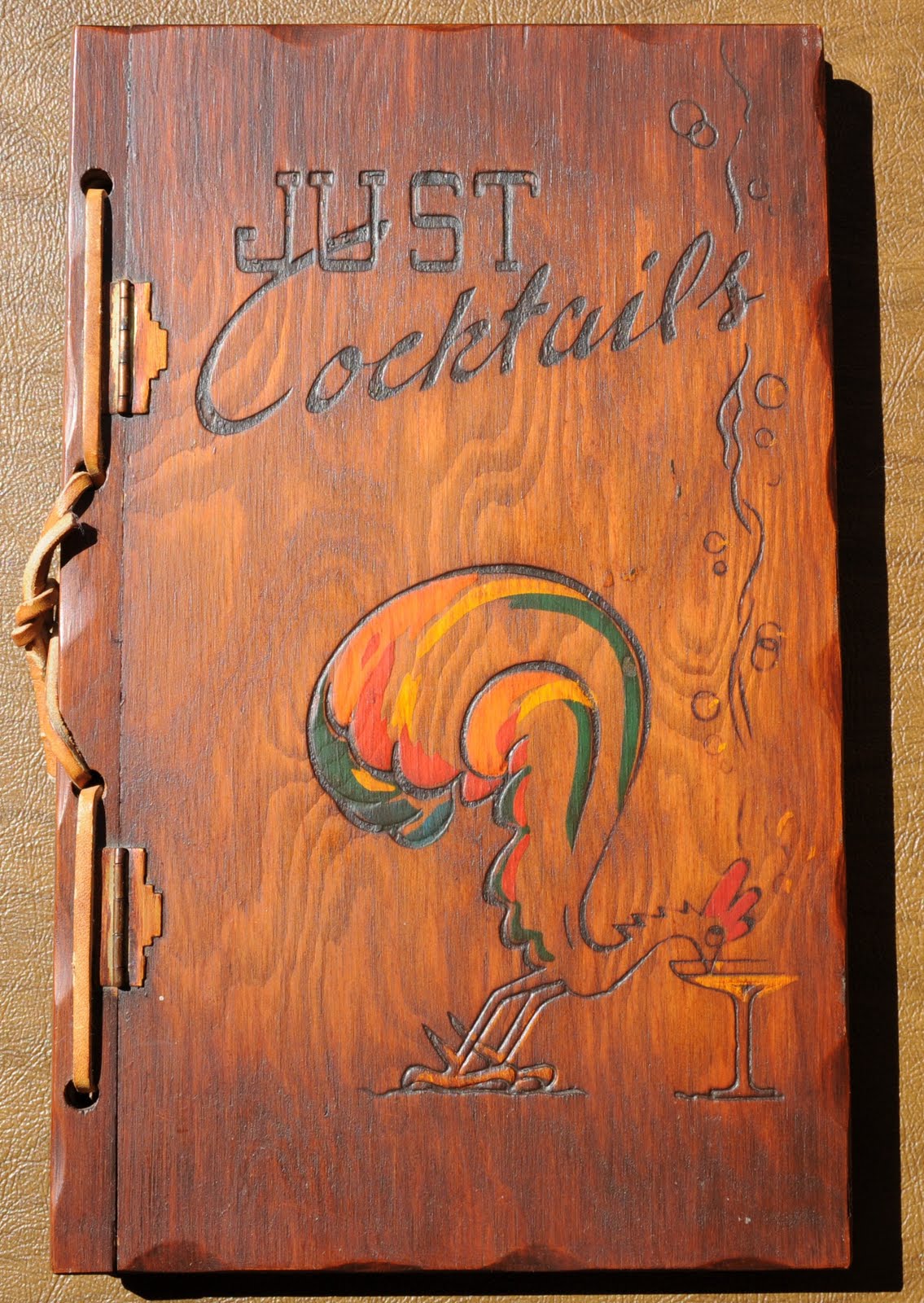
Just Cocktails

It begins with a bottle of rye.

The story, if it's any good, can't then start with just any bottle.  It has to be a bottle that'll stop you, a bottle that'll make you take notice, make you think to yourself, "I'd like to take you home and do things with you."

(rī)¹, a fabulous new rye whiskey, has its home in just such a bottle.  I know, I know.  (rī)¹ is a ridiculous name.  Rye is rye, and if you're going to go to the trouble of brewing it, and bottling it, and you do both things right, why hire some newbie design-school-grad to create a name that's pretentious?  It's not like rye drinkers are going to be taken in by fancy monikers, right?

Oh, but the bottle.  The bottle is a beauty.  There's a good inch of solid, clear glass at the bottom, so thick that it makes you think crystal.  And that crystal is the lovely foundation for the slender, elegant bottle that holds your rye, the bottle so tall and sexy that it reminds you of something you'd find a premium vodka in, but this isn't vodka, so the only thing that's clear is that beautiful base, because the rest is all rye whiskey, the whiskey rich amber with a hint of cherry red.  Flashy?  Sure.  But eye-catching in a good way.  This is not a slutty bottle.  Maybe that newbie grad was onto something after all.

Anyway, the bottle has been staring at me from the shelves of Alameda Cellars, a liquor store that's around the corner from the bookstore I manage.  Ever since I started working in Alameda, I've had to buy my own Diet Coke.  In San Francisco, Delaney's was next door, and the people who poured drinks there were my friends, and they were always happy to keep my glass full.

Of cola, ok?  Of cola.

But now I don't have a great bar like Delaney's right next door to me, so I have to buy my Coke, and on those days when I have the gumption to actually walk around the corner to Alameda Cellars, I'll score a sixpack there instead of buying onesie-twosies from the bagel shop.  The Cellars had a great deal on Bulleit Bourbon a few months ago, and that's when this bottle of rye first started making eyes at me.  Sitting there on her shelf, all lonesome, with bourbon for company but no sister ryes.

Just sitting.

I've mentioned that I'm into vintage cocktail books, yes?  Yes of course.  Imagine my delight, then, when Randy and Katy came a'visiting.  Katy was very pregnant (Evan would make his arrival in less than a week - welcome, Evan!) and I hadn't seen them since Arizona, in the Spring, so after hugs and handshakes, Randy hands over this book.

Now, if the bottle I've described was remarkable, this book was something else entirely.  Just Cocktails was its title, the title seemingly burned into its wooden cover.  Yes, both the front and back covers are wood, their edges gracefully chamfered, the covers – and all the pages in between – held together with a leather strap.  The title, Just Cocktails, printed above the etching of a fanciful rooster pecking at a martini glass, the rooster's tail feathers painted yellow, orange, green and red.

The book in such amazing condition that it's difficult to believe it was published in 1939.  But that's what it says on the title page:

Published by the Three Mountaineers, Inc.  Decorations by Tad Shell

and by decorations they mean dozens and dozens of wonderful drawings to accompany the dozens and dozens of incredible cocktails.  This is a book that doesn't spend lots of time setting the scene.  There's a little bit of that, sure, like in the chapter titled Cock Tales and Cocktails, where the editor gives us two stories for the origin of the word "cocktail."  W. C. Whitfield tells us of the revolutionary-age barmaid who tossed together drinks for Lafayette's officers, and snatched tail feathers from a nearby rooster to spear the cherries, and also the story of the buccaneers of the Spanish Main who stirred their potables with the plumage of West Indian Cocks.

So there's a little of that kind of color, with Tad Shell's intoxicating illustrations (see the buccaneer, above), but this book's main concern is just cocktails, and that's what W. C. Whitfield compiled here, so thank you, W. C.  And thank you, Randy and Katy, for thinking of me and putting it into my hands.

Let's end where we began – with that bottle.  Because all I needed was a little push to get it into my hands, the same hands that hold Just Cocktails.  I'll try its rendition of a Whiskey Sour

½ RYE
½ LEMON JUICE
POWDERED SUGAR

and since Just Cocktails  is a little vague when it comes to measurements, I'll use half a teaspoon of powdered sugar.  And then, because I'm already making judgment calls, I'm going to crack open the jar of Luxardo Cherries I scored at Blackwell's Wine and Spirits in San Francisco.  If you haven't been, go.  If God drank, he'd shop at Blackwell's.  They introduced me to Luxardo, The Original Maraschino Cherries, and assured me that they bore little resemblance to the neon red cherries you find in Shirley Temples.  Whiskey Sours often call for a cherry, so Luxardo it will be.

And I'll toast Mr. Whitfield for giving me the push, and Randy and Katy for giving me the book, and Evan.  Of course I'll toast Evan.  L'chaim!

Wednesday, June 30, 2010

One Jigger I Pour No Less No More

I don't own a jigger.

I know, I know.  This makes no sense.  Here I am, writing about all things wonderful when it comes to drinks, how can I not possess a jigger?

I eyeball it, is what I say.  I go by feel.  And a shot glass should work, right?  Especially if it was given to me by my favorite bartender ever, the Russian Paulina?

Excuses.  Excuses all.  And the more I delved into vintage cocktail books - I mean, this whole endeavor began with Jerry Thomas' Bartender's Guide.  Remember that?  We were going to drink our way through the book.  Yes, yes - we have gotten a little far afield.  I know that, too.  But you'll forgive me.

Right?

Anyway - some of these old Drink Books are gorgeous.  My favorite was The Merrie Christmas Drink Book.  It came out 55 years ago, in 1955.  (Dig all those 5's?  Because I do.)  It's just a whimsical little book - with flowers and snowflakes and a gent blowing a horn whilst standing on a horse - all these are just some of the decorations adorning the cover.  And when you open that cover and look inside?  The recipes begin on page 9, and the first concoction is an Absinthe Cocktail:

3 parts Absinthe
2 parts Water
1 part Sugar Sirup
Shake with ice.  Twist lemon peel over drink.

Come on - what's not to love about that 3-2-1 countdown?  Or spelling it "sirup"?  But the best thing, for me, was the lyric at the top of page 9, all beautiful in red calligraphy:

Now Dasher; now Dancer!
Now, Prancer; and Vixen!
St. Nick's at the bar,
And the cocktails he's mixin'!

Did I know St. Nick would make an appearance at the start?  Of course not.  But this Nick loves that. 

Anyway.  Jerry Thomas.  Have I mentioned Jerry?  How his book began all this?  And here I am, without a jigger?  And here also many of these delicious books that are sprouting on my shelves all lead with the admonitions - use the best ingredients (some of the writers were slow-food enthusiasts decades before that arrogant concept was coined) and have the best tools at the ready.

What's the most basic best tool?  Alas, the dreaded jigger, of which I was bereft.

Here's where it goes back to my dad.  You knew I'd be going there sooner or later, yes?  Yes.  Indulge me.

I'm sitting with my mom, in her dining room, a few weeks after my dad died.  It was quiet and dark and we'd talk, and then not.  When not, the only sound was the antique clock that hadn't ticked until I wound it the week before.

Tick tock.

I look over at my dad's bar, at all the glasses on display above, to the liquor below, and I'm intrigued suddenly by the cabinets underneath.  We'd ransacked it earlier, taken out the good Metaxa so we had it on hand when callers called.  If you're Greek, there are three things you have to have on hand to offer callers when condolences are being given:  coffee, paximathia (unsweetened Greek biscotti), and Metaxa. 

I drank a lot of Metaxa in between my dad's death on Monday and his burial on Friday, seemingly without consequence.  God, I was bulletproof for a while.  Until the Thursday night.  But we'll leave Thursday for another time.

That was the first time I can remember going through those cabinets under the bar.  And now, in the quiet of the house, I recalled the treasures that lay hidden, treasures that I hadn't paid attention to at the time because there was so much else to do, so many people expressing sympathy.  But that day, with just my mom at the house, with just the ticking keeping us company, I thought 'jigger.'  Of course my dad must have owned one.  So I asked.

And my mom just shrugged which I took as permission.

Jiggers.  Sure, you can buy them anywhere.  Probably for a few bucks.  But I wanted my Dad's.  This has led to some contention with my brothers.  I am the middle of three.  And even before my dad died, we had started staking claims.  George was holding my dad's baseball glove hostage.  We all loved that glove.  In my letter, I let my dad know that playing catch with him was my favorite memory as a boy, the ball thwocking into his 1940's mitt.   After the funeral, George and I would learn that Dean had been given my father's wedding ring.  You know, for safe-keeping.  And now, here I was, coveting his jigger.

He had one.  It was in the first drawer I opened.  Just one of those stainless steel jobs exactly like the one you're thinking of when you think jigger - when viewed from the side, it's an X, the top portion holding 1 ounce, the bottom holding 1½. 

Because I wanted to drown out the ticktock, and because I was holding the cool jigger in my hand, I asked my Mom, "Do you know when Dad got this?"  I knew my Mom would know.  She knows everything.  I was scared of the answer I might receive - "Oh, he picked that up at Target a few years ago," - but I had to say something to silence the ticking, and when the answer came, it was better than I could have expected.

"All his bar things, your Dad owned all of that before we got married.  He brought all that from the apartment."  The apartment being the rooms he shared with his aunt, my Thea.

"So, this is from the fifties?" I said.

I held a cardboard box with a yellow, plaid design.  It proclaimed "Mr. Bartender.  Another Member of the Mr. Bartender PRODUCTS, TORRANCE, CALIFORNIA."  And also, "ONE JIGGER I POUR NO LESS NO MORE."  Inside are five bottle pourers, stainless steel like the jigger, but attached to corks.  You stopper a bottle of booze with them, and when you tilt it, they're supposed to let out an ounce of liquid.  They were ok, but that box?  I mean, go ahead, just look at that box.  How brilliant is that?

While I'm marveling, my mom is still digging.  First, a plastic martini shaker, the one I'll use to mix Harry DeCourcy's marvelous margaritas.  A larger pourer.  And then.

And then.

Did I mention that I started this endeavor because of a vintage drinks book?  That I've been collecting other cocktail books, new and old?  From the obscure, like The How and When, by Marco.  My copy is the first, published in 1937.  A beautiful black book with a gold spine.  Its preface begins, "The purpose of this book is not to awe the reader with the stiff traditions ordinarily associated with the formal use of fine wines and rare liqueurs."  And while you may not have heard of Abe Marco, or his book, or the bourbon whiskey he sold on Wabash Avenue in Chicago, you probably recognize the Mr. Boston Official Bartender's Guide.  It's been reprinted almost annually since the first edition of 1935, with some exceptions.  The war years saw no new printings, while some years ushered in two separate editions.  The most current copy I have is from 2009.  It's one of those things you toss out every year when the new edition appears.

And then.

And then my mom hands me the Old Mr. Boston De Luxe Official Bartender's Guide.  By the subtle difference in titles it's easy to see that this copy is much older than mine, and it's also easy to explain why it's so much cooler.  The cover is the familiar red, but brighter than mine.  Such a brighter red.  The lettering on the cover is gold, not silver.  Especially wonderful is the $1.00 stamped into the upper right corner.

The endpapers?  The endpapers are sublime.  The 2009 edition has plain, black endpapers, where this earlier one sports works of art.  The papers before the title page are illustrated with shelves in a well-stocked bar, picturing liquor bottles and glasses and books and steins.  In a bit of design-flourish that would impress Chip Kidd, this full color illustration is reproduced again at the back of the book, which is common, but there the illustration is all in red, echoing the cover, but each glass is highlighted in white, with the name of the glass now added underneath.  And where one merely gaped at the first illustration, here at the end of the book one receives an education in the difference between the types of glass one should serve a Delmonico in versus a Sherry, or a Hot Toddy compared to a Flip.

Many cocktail books were produced by liquor stores or liquor makers, and part of their charm is the ads you'll find inside, like the ad for Marco's own bourbon.  My copy of Mr. Boston eschews such ads, whereas my dad's is studded with full-color advertisements for Old Mr. Boston Vodka, Old Mr. Boston Golden Gin or his Mint and Orange Flavored Gins.

Can you tell I'm loving this book?

I'm loving this book.

I want to look at the copyright date.  I do.  But I'm also scared again.  I don't want to pop this champagne bubble.  I'm constructing stories with this book - essays, novels.  And I don't want reality to intrude.  But I do, of course I do, because I have to know.

So I look.  I'm a bookseller.  It comes natural.

This edition of the Old Mr. Boston De Luxe Official Bartender's Guide came out in 1961.  1961 was one of those odd years that saw the publication of two editions of the Guide.  The first was printed in January.  This copy, my Dad's copy, came out in June. 

My Mom arrived in the United States from Greece on May 8, 1961.  She met my dad in Stockton - one of the Pappas' got baptized that September.  If my dad was anything like me, he purchased his new copy of Old Mr. Boston and threw out the old.  Until 1961.  When obviously he decided he didn't need to keep buying copies of this book.

And there's something beautiful here - this glimpse at a stratum of my dad that I didn't know existed.  And though we never spoke of Mr. Boston, here we both were, buying his book, fifty years apart.  I hold the bright red book in my hands, imagining my dad holding it in his.  Did he ever make the Adonis on page 1?

1 Dash Orange Bitters
¾ oz. Sweet Vermouth
1½ oz. Dry Sherry Wine
Stir well with cracked ice and strain into 3 oz. cocktail glass.

Or the Olympic Cocktail on page 69?

¾ oz. Orange Juice
¾ oz. Curacao
¾ oz. Old Mr. Boston Five Star Brandy
Shake well with cracked ice and strain into 3 oz. cocktail glass.

If he did, I know my dad substituted Seven Star Metaxa for the Five Star Brandy.

Tony liked his Seven Star.

My dad's copy of Old Mr. Boston now stands on my shelf, with the rest of my collection, between The Merrie Christmas Drink Book and Marco's The How and When.  It fits there, it has a home again.

I told my bothers about the jigger.  They know I have that.  But I didn't tell them about Mr. Boston.  It's my turn to hold a hostage.

Monday, June 21, 2010

Happy Father's Day

.

One of the hardest things I’ve ever done is help lift my father’s body up and off his rented hospital bed and onto the stretcher belonging to Salas Brothers Funeral Chapel. I don’t remember much about the moment – a moment I thought I would never forget. I think my brothers were there, helping. But I don’t know. What I’m left with is an impression, a sad sense that suddenly there was a before and an after, and that the after had started in a rush.


When the men from the funeral chapel left the house that Monday morning, when they wheeled my father to the hearse – was it a hearse? Of this simple fact I am also unsure. I know he was covered with a dark blue wrap. Something soft. That image is indelible. But again, can I even swear to that? Those moments – from Dean’s early-morning phone call telling me my father had died. My race home to Modesto, desperately wanting to be pulled over so I could yell at a Highway Patrolman, vent my anger and loss at someone. On anyone. Then parking outside the house on Sherwood Avenue. The only home I’d ever known in Modesto. My parent’s house. Hugging my mom. Holding her while we both cried. Then walking into that quiet bedroom. Those men outside, waiting quietly, respectfully. Waiting with their dark blue wrap.

My dad, especially there – close to his end. He had spent more and more time in the bedroom, at the back of the house. I will say nothing more than it was too hard for him to move, to join us in the family room. To sit on the couch, or at the table, where he had sat so often before.

My point? My point. I have a point. It’s right there. It’s that my dad – even at the end, even when he wasn’t with us, chatting and laughing and marveling at his grandkids – even then, my dad filled that house. And I was unaware of it. We’d sit there, in the front room, when he was resting in the back, and we’d talk. Of course much of the talk was about my dad.

Dean. Dean asked me, he said, “Did Dad ever yell at you?” My dad’s Greek, we’re all Greek, so we’re used to raised voices. Used to the get-togethers where Metaxa was poured, and spilled, and voices. Ah, those Greek voices. To hear those voices again, what I would give to hear those loud, Metaxa voices again.

But my dad? Not my dad. Mad? Of course my dad got mad. But he didn't yell. Dean said, “Dad got mad at me one time. Not counting when I got the earring. The one time was when he picked me up from football practice. Pop Warner. He picked me up at the parking lot at Davis High, you know, there near the baseball diamonds? I told him,” Dean said, “that I was embarrassed to be picked up by him because he was driving that ’63 Chevy Impala. Can you believe I’d tell him that? When I was in eighth grade? That I was embarrassed? Shoot me. I’m an idiot. But yeah,” Dean said, “Dad got mad at that.”

Me? I gave my dad plenty of reasons to get mad. The main time, I told Dean, was when my Dad thought I was doing cocaine. I helped out during the summer at his pharmacy. His pharmacy was unbelievably cool. There was an attic full of old magazine racks, paperback book racks, adding machines. Full of dust and that old smell that attics have. But the pharmacy itself? Behind the counter, where my dad worked – further coolness. There was a poster he got from the Modesto Police Department, showing what the most common handguns looked like when viewed head-on. He’d had to glance down more than one barrel during robberies, and the coppers thought it would be helpful if my dad knew what kind of gun had been used.

The crazy thing is, that’s something my dad was able to tell them, after. Me? I’d have been on the floor, throwing my wallet over the counter, absolutely unable to later tell the police, “It was small, probably a .25 caliber.” As if.

But there was so much else that made the pharmacy cool. Like my dad’s mortar and pestles. Back then, pharmacists actually “made” some of the prescriptions they filled. I thought it would be fun to grind up some Bayer Aspirin – just grind it up in a pestle. Maybe when my dad was in the bathroom so he didn’t know what I was up to. And what would make it extremely cool is if I then took the powder and put it all in one of the glass vials at my disposal, there at the pharmacist’s counter in the back of Rogers Drug Store. A clear glass vial no bigger around than my pinky, with a black plastic screw-top.

What was I going to do with the ground up aspirin? I don’t know. Go ask some twelve-year old what he’d do with it.

What I did do with it was to hide it, at home, in my bedroom, in my bottom drawer, under some pants, inside a travelers chess set. This little magnetic job, with a black and white game board that folded over, hiding its tiny magnetic chess pieces – and my stolen glass vial filled with ground up Bayer Aspirin.  My parents would never find it there.  Never.

They found it.

Dad confronts me, I tell Dean. I’m trying to explain to my dad that I’m a nerd, a geek, that a requirement for that is no use of illegal drugs. He’s not buying it. I tell him it’s aspirin. He asks if I really expect him to believe that.

I do, I really do.

Then my dad does this cop-show thing. He unscrews that slim glass vial, wets the tip of his little finger, dabs it to the powder, and licks it. He does that twice. Dean’s laughing a little bit. “He really did that?” Dean asks. “He really did,” I say. “Thankfully,” I say. Because that cop-show move finally – praise Jaysis! – convinces my dad that I’m not Modesto’s first preteen medhead.

So for that, yeah, my dad got mad. And I get it. I mean, he’s a pharmacist. He has this respect for drugs. This enormous respect. And if his son had abused this product, this thing that he studied in school, and then had worked with for thirty years, would work at for twenty-five more, for his entire life – until that terrible January day in 2009 when he collapsed at work – I mean, yes. Yes. I get it.

And that was it, really. The one time he raised his voice. Hell, Dean and I decided we can’t get to 8 am without raising our voices.

I’m getting back to my point, I am. I promise. I can hear you now. “Nick,” you’re saying, “what’s your point?”

My point is that my dad filled that house even when he was in the back bedroom. We felt him even when he wasn’t next to us. And I know this because after – after the men took my dad away, after they covered him in soft blue and drove him away – when we sat there, my Mom and I and Dean and George, I felt – we all felt – his absence. We had gotten used to not having Dad around, talking about Utah, the Giants, politics. But that morning, when the men drove away – the emptiness in the house was palpable. The void he left – I could reach out and touch it. I don’t care what you want to call it. His soul. His aura. His spirit. I’m just telling you that something was gone that had always been there before.

Just gone.

Later, at some point during the after – after he died, but before his funeral – we started going through his stuff. My dad had this bureau in that back bedroom, my parent’s bedroom. Four small drawers on top – two over two – over four big drawers underneath. The small drawers were just full of Dad stuff. Great dad stuff. Nametags. His money clip – holding $24. Pens. Oh my god, the pens. If my dad had a weakness, if was for pens. And not the good ones. Karen and I bought him a pen from Tiffany’s one Christmas. Blue box and all. I thought he might use it. Could I have gotten it any more wrong? He wore it a few times, my mom said. To some weddings. Maybe a baptism. But then it got put back in that blue box.

The pens my dad did like?  Promotional things from pharmaceutical companies. Pink. Fluorescent green. Clean white.  Pens advertising drugs with names like Qvar, Actonel, Nitrolingual.  I’ve got this picture of my dad, in my head, clicking a pen – whichever was newest – staring at it as he clicked onetwo onetwo.

Just like that - clickclick clickclick - my dad watching it, then swiping the pen across a scratch pad.  Swipe. Smiling at the fresh line it made.

Smiling.

So we’re going through that drawer. Well, Dean, mostly. And we’re marveling at the cool dad stuff. And that’s when Dean laughs. Dean’s got this thing where he laughs and shakes his head at the same time. If you know Dean, you know what I’m talking about. So he laughs, and he’s shaking his head, and I say, “What?” And Dean says, “You’re not going to believe this.” And he keeps shaking his head, laughing, and he holds up, in that dark back bedroom, a slim glass vial with a black plastic screw-top. Full of ground-up Bayer Aspirin.

And Dean’s thinking what I’m thinking, and we don’t have to say much of anything. We both just look at the vial. This vial I hadn’t thought about in more than thirty years, this vial that I’d just told Dean about.

And we didn’t say much of anything.

What I would like to try to do, if I can, is emulate my dad. Is to try and be more like Tony Petrulakis. To remind myself that Elizabeth is six, and Kristina three. That if Karen knows it takes them more than five minutes to get ready in the morning, I should know it, too. That if we’re late, it’s my fault, not theirs. That if it’s easy for me to raise my voice, easy because I do it often, that I need to recognize that. That I need to ask myself, if Elizabeth and Kristina are having a quiet conversation in some future dark bedroom, and if Elizabeth asks, “Did Dad ever yell at you?” Do I want Kristina’s answer to be, “Always,” or not?

I’m thinking I would prefer “or not.”

My point. I keep trying to get to my point. My point really is – I miss my dad and I wish he were here, that I wish I could tell him, “Happy Father’s Day, and many many more.”

There. That’s my point. Happy Father’s Day, Dad. Happy Father’s Day.

.

Wednesday, March 31, 2010

Thank you, Dad

My dad died a month ago, on March 1st.

When he was diagnosed with cancer in January of 2009.

When my father was diagnosed with cancer.

When Tony Petrulakis was diagnosed, I realized I had never said "Thank you."  I manage a bookstore.  I thank people for buying People Magazine, but I had never really thanked my dad.

Because there were so many things I wanted to say, I started writing my dad a letter - and finished writing it the week before he died.

My mom read it to him on a Saturday night in February.

He was quiet.  He cried a little.

My dad doesn't cry.

This is that letter.


*  *  *


Thanks for carving the letter ‘N’ into the peanut butter of my sandwiches. I do this now for Elizabeth and Kristina. Elizabeth swears it makes the sandwiches taste better.

Thanks for playing catch with me. Those are my best memories as a kid. Playing catch with you.

Thanks for taking me to the doctor after I dislocated my elbow while playing catch with you.

Thanks for getting lost on road trips and showing us more of the American West.

Thanks for driving us to Carmel for Easter at the Kastros’.

Thanks for always stopping at Casa de Fruta on the way to Carmel.

Thanks for getting closer to the majors with every telling of your baseball exploits in Carbon County, Utah.

Thanks for making spaghetti for the boys that one time when Mom was in the hospital. Really, once was enough.

Thanks for making wine with Nick Kondarakis.

Thanks for looking at my swollen ankle, broken since early afternoon when I fell off Mark Arnold’s bike, and saying, “The boy’s ankle is broken. We need to get him to the hospital.”

Thanks for giving me my first real job.

Thanks for showing me how to stop a quick-change artist during the first week of my first real job.

Thanks for teaching me not to lean on the counter, doing nothing, while working at my first real job.

Thanks for indicating to me and Cousin Peter that our argument about music was pretentious.

Thanks for taking us to Santa Cruz for summer vacations with our cousins – Peter, Stella and Mitch – even if Peter was wrong about the Doors.

Thanks for holding my hand when that big wave hit. I was underwater, feet flailing, choking on seawater, panicking, but your hand holding mine was so strong, so big. So big.

Thanks for keeping the best Christmas presents hidden until we thought we were done, like the Daisy BB gun behind the couch or the three bikes, one for each of us, waiting in George’s room.

I loved that Schwinn with its banana seat and green and white tassels streaming from the handlebars.

Thanks for teaching me to ride that bike.

Thanks for not getting upset when I crashed the Schwinn into the Garcia boy’s beautiful blue Impala the same day you taught me how to ride. Riding was easy. Stopping, not so much.

Thanks for getting me Twiggy – from the pet shop at the Village – for my fifth birthday.

Thanks for hiding her in a box in the back of our green station wagon.

Thanks for buying that station wagon.

Thanks for teaching me how to get Twiggy to stand on her hind legs by teasing her with bologna.

Thanks for being able to whistle for Twiggy.  Do you remember how, wherever she was - down the block, around the corner, at the park - she'd come running, low to the ground, legs churning, her fur swept back?

I wish I could whistle like you, two fingers and loud.

Thanks for getting me my first haircut, a slicked back 50’s hairdo.

Thanks for letting your barber be my barber.

Thanks for not telling Mom what Donny and Jimmy really named their dog.

Thanks for picking out a different shade of shag for every room in the house. Every room. Thanks that mine was named “Candy Stripe.”

Thanks for letting me drive Elko to Winnemucca, past Battle Mountain, 125 miles. When I was too young to be behind the wheel of a car.

Thanks for picking me up from Somerset Junior High in a brand new car.

I won’t mention that the car was a maroon, two door, Chevy Citation.

Thanks for letting me and Randy take that car to the Prom, when it wasn’t so new, after we killed his dad’s car battery by listening to the Giants’ game on the Lebaron’s radio all afternoon while we detailed it. For the Prom.

Although, since my date to that 1983 Prom was Karen, maybe the Citation wasn’t so bad after all.

Thanks for lighting the fireworks on the Fourth of July.

Thanks for taking me to San Francisco Giant’s games.

Including Ed Halicki’s no-hitter in August of 1975.

Thanks for taking the San Mateo Bridge, making us drive up 101, so we, the boys, could always call out when we first saw Candlestick. George always winning, Dean not caring, me getting mad.

Thanks for taking us to an entire season of Modesto Reds games.

I don’t know how much baby-holding you did when we were little. Different times, different times. So – thanks for remaining calm when Karen and I handed a week-old Elizabeth to you.

Thanks for holding her.  So gentle.

Thanks for selling your 1963 Chevy Impala just before I was old enough to drive. I probably would have wrecked it and myself.

Thanks from all the people who came into Rogers Drugstore, people with questions, people who were intimidated by doctors, or nurses, thanks for taking the time to talk to them. Kindly. Cordially. As if their question was the most important question you’d field that day. Thanks for letting me see that courtesy, your unfeigned politeness.

Thanks for letting me discover the Saint books – lifted from the mass-market rack at Rogers – while I ate lunch at the back counter in the drugstore.

Thanks for driving me to San Jose to buy my first Nikon camera.

Thanks for not rubbing in my failure to catch that fly ball to right during the invitational tournament with the Roadrunners in 1977.

Thanks for not letting my grounding – from Karen – last more than a month. When I got grounded, senior year, for bringing donuts into physics class.

Why did I buy those donuts on the day of parents’ back-to-school night?

Thanks for driving us to Utah all those summers.

Thanks for starting in the middle of the night so we could sleep in the back of the wagon.

Thanks for letting Dean sing along, mile after mile, to Ride-along-cowboy. George and I would have shut him up.

I know – it was Rhinestone Cowboy. But not when Dean sang it.

Thanks for taking us to Hiawatha. For showing us your brother Dean’s graffiti scratched into a column of your school. For allowing me to take foundation stones from all that was left of your house.

Thanks for all the Hiawatha stories – stories about the Goose ratting you out, Papou catching you from behind when you were sure you could outrun him, all the Greek-town tales.

Thanks for not losing your cool when those hippies busted out the window of the wagon when we visited Yosemite.

Thanks for buying me those huge jawbreakers when you took us to Columbia.

Thanks, when I was three, for carrying me in Disneyland. Everywhere. When I refused to walk. Anywhere.

Thanks for agreeing to George’s request – the last time he flew home from Harvard – that we go well out of our way and drive up 101 through San Francisco so he could get the most dramatic effect, that view of the SF skyline, for his last trip home after graduation.

Thanks for not getting too mad when I inveigled all your boys to buy the same program that accompanied the Modesto premier of Star Wars at the Briggsmore Theatre.

Thanks for driving us to Christmas Tree Lane in Ceres.

Thanks for driving us to Sambo's after church.

Thanks for driving us to church.

Thanks for driving.

Thanks for not buying that two-story house. Even though I cried when you didn’t. Your house has been the best house imaginable. Even when you demolished George’s bedroom to make a dining room.

Thanks for not demolishing my bedroom.

Thanks for coming into my bedroom in the dark of night after I called out ‘Dad’ about 700 times in a row. Called out ‘Dad’ the night after you took us to see Jaws at the Drive-in. In the wagon.

Thanks for patiently explaining to me that we were 100 miles from the ocean. No sharks in Modesto.

Thanks for being early every time we went to the airport.

Thanks for being early.

I’m sorry Tony-Time never rubbed off on me.

Thanks for letting Mom go with me to Greece for an entire summer.

Were you ever apart before that? No. No, you weren’t.

Thanks for having my Koumbaro John sign his name over the almost-hole he almost-slammed through the living-room wall the night the Greek dancing got a little spirited on Sherwood Avenue.

Thanks for all the Dad stuff you keep in the top drawers of your bureau. Pens, knives, matchbooks.

Thanks for always busting out the Metaxa when we had visitors. Like Pavvy. I think Pavvy appreciated it the most.

Thanks for using All Spice when I was a kid.

Thanks for always saying thank you when I bought you All Spice as a kid.

Or soap on a rope.

Thanks for pulling the covers as high as I indicated - chin, ear, or forehead - when you tucked me in.

Thanks for working so hard, for us, all your life

Thanks for driving Mom to our house on those Wednesdays when Karen and I needed you both to watch Elizabeth. And then Elizabeth and Kristina.

Thanks for loving Karen like a daughter.

Thanks for being the best Papou ever.

Thanks for loving Mom, so much.

Thanks for being the best man I have ever known.

Thanks for being my dad.

I love you.

.

Friday, January 29, 2010

Where Have You Gone, Ted Hemenway?


104

Whiskey Cobbler

(Use large bar glass)

2 wine-glasses of whiskey.
1 tablespoonful of sugar.
2 or 3 slices of orange.

Fill the tumbler with ice, and shake well. Imbibe through a straw.

* * *


Don't leave - even if you don't like baseball, because this isn't about that, not really, but it has to start there, on a diamond in Modesto.

If you knew me, you'd know I like baseball. If you asked why, I'd credit my Dad. When we played catch with Tony - 'Wheels' to his friends and family from Hiawatha - he'd always tell his three boys that the further away he got from Carbon County, Utah, the closer he got to the Major Leagues. But playing catch with him? The pleasure of that? Even that time in sixth grade when he had me shagging flyballs at Woodrow Park - no one hit flies like my dad - even then, when the day ended with a dislocated elbow because I tried to throw the ball as far as he could hit? Those times with my dad, the baseball slapslapping into our gloves, did a lot to make me fall in love with the Game.  But there was another man who played a part, too.

Ted Hemenway.

One of your options - if you watched television in Modesto, in 1972 - was, if you were so inclined, to tune into Bingo With Ramona. I was inclined. Broadcast in black and white, I watched it and played it and one great afternoon, I made Bingo. Instead of calling it out, you had to call the station and read off your numbers. I thought I won the cash first prize. But someone dialed faster than my five-year-old fingers, and I had to make do with season tickets to the Modesto Reds.

Baseball tickets instead of money? carped my little self.

My parents, though, they knew better, and so from April through August, we traveled across town and watched a team on its way to winning the title that season.

The Reds were a Class A farm team for the St. Louis Cardinals, and that year they were great.  You wouldn’t have known how good they were going to be based on their ballpark. Del Webb Field was not state of the art. Bleacher seats, one concession stand. One drinking fountain near those concessions, its white enamel stained rust-red near the faucet. But that fountain would become more beautiful than the Trevi on the day I wandered, alone, under the bleachers. Wandered through the skinny crossbeams holding up the seats. Crushing peanut shells, looking for foul balls, instead discovering my first tossed away – but still lit – cigarette. Dragging on it – once, strong – sent me running for Del Webb’s beautiful, rusty fountain.

And sorry, I don't mean to dwell on Del Webb Field, because this is supposed to be about Ted. But the field was so important, and also the people we met there - what was the name of the vendor selling popcorn and crackerjacks, that man who always had his hair slicked back, fifties style? Those stands he stalked were like pews, and we his congregation.

To get to his stands, you walked past the Red's dugout, then up a few steps - the stands were to the left, third-base side. But that landing there? At the top of the steps? You could look right into the Red's dugout from that magic spot.

There was always a player sitting in the dugout, at the end nearest the magic spot. The same player every game. A pitcher named Hemenway.

Ted was a lanky righthander. About my dad's height. 6'2", maybe 6'3". But probably no more than 170 lbs. We went to so many games that year. The year George Wallace was shot. The year of Watergate.  Of the signing of the SALT treaty. The year McGovern chose Eagleton to be his running mate. The year Eagleton withdrew. That all happened during that great season for the Modesto Reds, with Ted Hemenway sitting at the end of the dugout, and me sitting on the other side of the chainlink fence separating us. Me yakking away to a real, live ballplayer. That real, live ballplayer listening.

I started to bring food to the games, food to share with Ted. Sunflower seeds. Oranges. Whatever was handy. And all that time, Ted paid attention, chatted back. Can you imagine? Taking the time to pass the time with a kid, not even six?

During the seventh inning stretch, they'd roll out this target to the mound - plywood, with a catcher painted on it, a hole cut through the plywood where his mitt would be. They'd call numbers - from the programs - and if your number was called, you got the chance to throw from home plate up at that painted catcher. My dad got called once. So close - but his attempt ricocheted off the rim of the hole.

Baseball programs.  My mom kept score in those.  Does anyone keep score these days?
Through all that - the keeping score, the wins and losses - Ted talked to me about Baseball. About how hard the Game was. How great. His worry that he didn't have the stuff to make it to the Bigs in St. Louis. But who cared? I had his ear, he had mine. I even had the nerve to invite Ted to my birthday, right in the middle of the season.

And Ted said yes.

Picture asking a Baseball Player to your house, when you're turning six, and having the Player accept. Imagine that Player coming, and enjoying a meal cooked by your mom. Chicken and pilafi. Meatballs. If you're lucky, you'll get to taste my mom's meatballs someday.

Ted gave me his cap, for a present. Not a new one - his own. He had all his teammates sign it. Over the years, their signatures have faded - but not the HEMENWAY. Printed on the underside of the bill, all caps, black sharpie against green. His sweat staining that green with a salty wave of white.

I love that hat.

And I love baseball, for a lot of reasons. Because it's where I went with my family when I was a kid, traveling in our station wagon to watch Mays and McCovey.  Foster and Kingman.  Marichal and Bonds.  Me and my brothers in the back of our Chevy wagon on the way to San Francisco to watch those guys play, pointing at other kids in other cars when we'd slow down at the San Mateo bridge - they waving their Dodger caps, dreaded blue, we waving Giant black right back. The three of us trying to be the first to spot Candlestick as we headed up 101. George always winning, Dean not caring, me getting mad.

So I love baseball for that, and for how great it sounds on the radio.  And because a baseball player talked to me when I was five, and then six.

What do you think persuaded a man talk to a boy? Why do you think he took the time to answer my questions? To come to my house? I think about Ted a lot. Think about the friendship he shared with me during that season. I keep coming back to the fact that Ted Hemenway was one of the good ones. One of those people you meet, if you're lucky, who impacts your life. Who leaves an impression. Footprints on my beach and all that.

This all came back, in a rush, because I was in Modesto last weekend. My godson was getting married. The rehearsal dinner was at the SOS Club - the Sportsmen of Stanislaus. And Del Webb Field's been demolished, but it was replaced by John Thurman Field, and it's where it's always been, right by the SOS. I hadn't been by that way in years. And all those memories came back. I remembered Ted, and told our story that night at dinner while we drank good, homemade wine.

When I got home, I decided to see if I could track Ted down. Why hadn't I done that before?

Baseball's beautiful because there are stats for everything and everyone - even a minor leaguer who played his first game for the Cardinals farm system when he was 17. I found out Ted was born in August of 1950. Which means he was only 21 that spring and summer. Somehow I always thought Ted was older. That meant Ted would be 59. Not old, not old at all.

Would be. Except.

Ted Russell Hemenway died last February. He was 58. Services were held for him on the 16th of that month at St. Peters Episcopal Church, in Ladue, Missouri. I wish I had tried to find Ted Hemenway earlier. I wish I had the opportunity to say thanks. To ask him some more questions, to hear his answers. To let him know that I treasure the time we spent on the steps of a field that now exists, like him, only in memory.

*   *   *

Some of Ted's friends set up a Memorial Fund. In their words:

"Throughout Ted’s life, he constantly gave more than he took, with countless examples of Ted volunteering to help others when nobody else would.

"With Ted’s sudden passing on February 12th, some of the family’s friends now believe it is time to return the favor and give back to Ted by establishing this foundation.

"This Fund will help pay for the remaining educational costs for Ted's children during this difficult time.  If you would like to support the Hemenway family, please click on the "Donate" button below and you can use Paypal to donate online.  If you would prefer to write a check, the mailing information is listed below.  This foundation’s goal is to raise over $25,000.  Every contribution, whether large or small, will make a difference.


"If you would prefer to write a check, please make it payable to and send it to: Ted Hemenway Memorial Fund, 10130 Bauer Road, St. Louis, MO 63128.

"Thank you – Friends of Ted and the Hemenway family."

*   *   *

I'll be making a donation - if you could, too, I'm sure his children would appreciate it.


Tuesday, January 19, 2010

Happy Birthday, Edgar Allan Poe


When I look up from the grave of Edgar Allan Poe, I see a street sign, “The Poe House,” with an arrow thataway. I actually didn’t know that Poe’s house still stood. I knew he was buried in Baltimore; that’s all I knew about Baltimore, really.  But his house? That was news.

I tighten my laces and walk, thataway, leaving behind Poe’s quiet gravesite in the grounds of Westminster Church - the church all brick, bloodred and gothic - but taking with me his collected works and the flowers I had planned to leave on the grave.

Roses, they have to be roses.

At the corner of Fayette and MLK, horns blare and a sunglassed Baltimore cop directs traffic. I call out, “Is the Poe House this way?” and he calls back, after waving an Audi on by, “Not your kinda neighborhood.”

I'm here for a wedding. It’s a sunny Saturday in May. The little eagle on the cop's badge glints carefree in the sun. I couldn’t ask for a better day, so this traffic-cop isn’t going to dissuade me from a pilgrimage to Poe’s house. I mean, we’re talking about Poe. Edgar Allan. “It's ok," I say.  "Do I keep going straight?”  Again he says, “Not your kinda neighborhood.” I think he’s looking at me, but it’s hard to tell because of his mirrored shades. So I just keep looking at him until finally he says, “Yes, that way.”

The surroundings change, fast. The further I walk, the more abandoned buildings I pass. An apartment row teeters, ready to fall like the House of Usher.  Apartment #13 is boarded up, and stenciled words warn, “No Loitering. No Trespassing. If Animal Is Trapped Inside Call 396-6286.”

I turn from the sign and a guy approaches me, a guy with holes in the toes of his shoes. About the time he notices the flowers in my hand, I notice his eye. Like the old man’s eye in the “Tell-Tale Heart,” it’s clouded, grey. When he asks if I can help him out, I reach for the change jingling in my coat pocket, leftside. So then he wonders if I have any smokes. Yes I do. Coat pocket, rightside. I don’t smoke, not really, but if someone asks, I like to be able to oblige. “Marlboro Reds!” he says, all excited. I flick open my Zippo, light the Red, and he puffs, happy.

“I’m searching for the Poe house," I say.  I'm thinking that since he's happy, maybe he won't mind a question.  "Any idea where it is?”

He looks at me with his good eye. And looks at the houses all around, the one there with a windowpane, spiderwebbed with cracks, another with a door that, behind the nailed plywood, used to be bright green.  “Shoot,” he says, “you can take your pick.  All the houses around here are po’ houses.”

I hold it for a second before I laugh. And then he laughs, both of us just laughing on a beautiful Baltimore afternoon. After I thank him for his time, he puffs again and says, “God bless you, my man, and good luck.”

At Fayette and Schroeder, another “Poe” sign with another teasing arrow. As I search Schroeder, I pass this family - mom, grandmom, and two little ones - sitting on a stoop, in the shade, sipping lemonade. The mom says to me, “You looking for the Poe House?” When I nod, she hoots and the grandmom hoots. “I told you,” she says. “The only reason for a white boy to be in this neighborhood,” and mom and grandmom clink lemonade glasses, “is that Poe House.”

The kids are smiling, too, and the younger one? His smile would stop a truck. He sparks that smile and the entire block shines. His mom squeezes his shoulder. “It’s about time we were getting home,” she says to him.  Then to me, “We pass that way. C’mon.”

The boy’s sister stands taller than he does, and she sports a pretty dress with yellow daises. Although it’s Saturday, the dress is looking like her Sunday best - all crisp and ironed. So starched daisies lead the way. And the Poe House is down the street but then you turn left and it’s over on the other side, on Amity Street, and I would never have found it so I say, “Thanks,” and daisies wave and a smile sparks and the mom says, “Take care.”

The mystery visitor.
There it is. The Poe House. Not gothic at all, not like the church where he’s buried, the church where for more than seventy years a Mystery Visitor, the Poe Toaster, in the darkdark of predawn on every January 19th, left roses and a bottle half-full of cognac on Poe’s grave, leaving the gifts to toast the day of Poe’s birth.

Poe’s house. Just a little brick house with a little brick chimney.

Poe’s house. Home to the man I read and reread. Too many times when I was too little, probably. Poe who invented the mystery story. Poe whose poems still tintinnabulate through my head.

We all have icons, and he's one of mine.

Poe’s house. And in front of that little brick house three boys play like my brothers and I used to. Three boys, climbing the lightpost outside a simple house on a plain street. I look at the kids as they scramble around; I think about Poe and his words. Just whiling away some time on a Saturday afternoon. One of the boys - almost lost inside a Baltimore Ravens t-shirt - laughs loud and so I laugh, too. Then I lay three roses on the steps, touch red brick, knock on the white door and go.

*   *   *

On my way back, I'm about to pass the same cop, and though you can never walk into the same river twice, it feels like the same traffic I'm about to wade into even though a few hours have passed.  He looks across the intersection my way - I can't tell if he remembers me, but he hesitates so I call out, "Hey, it was fine!"

And the cop doesn't say a thing.  He turns away, holds up one hand, stopping traffic that way, and motions with his other hand for that traffic to proceed.  Then he looks back at me.  "What?" he yells out, kind of clipped, kind of harsh, but maybe it's just so he'll be heard above the traffic.

It's a good moment to cross so I step off the curb.  I'm about to call back, "The neighborhood, Poe's house, it was fine!" I don't have time to tell him about the considerate people I met, the boys I watched who reminded me of my brothers...

Actually, I don't have time to tell him anything because as soon as I step off the curb he reaches for his gun, lightly places his hand on its holster.

"What?" the police officer repeats, eyes hidden behind those mirrored Ray Bans of his.

I step back, onto the safety of the sidewalk.  "Nothing," I say.

And I watch as he removes his hand from his gun and stops some more traffic.

I'll detour back to my hotel while thinking about neighborhoods and those judgements people we make all the time - sometimes snap judgments, sometimes considered - I'll think about that, how perceptions can lead to bias and what that can lead to.  I'll think about feeling welcomed when apparently I was supposed to be afraid; about feeling afraid, unexpectedly, under sunny Baltimore skies, where I was supposed to feel safe.

Then I'll reread some Poe from the book I touched to his grave, seek out my family, and then get ready for a wedding. Because I can, because I can retreat to the shelter of my hotel, of my friends.

Not my kinda neighborhood, indeed.


***

Addendum #1, January 19th, 2010:

This was written years ago when I visited Baltimore for the wedding of my godbrother.

Unfortunately, the trips of the Mysterious Visitor to Poe's grave appear to have stopped for the first time in seventy-five years.  Nevermore, quoth the raven.  Today there was silence in Baltimore.

I liked the tradition of the Poe Toaster, his mystery - so as not to forget, I'll raise a glass of cognac to Poe tonight and to his Visitor, and if you'll join me, I'd appreciate it.


***

Addendum #2, January 19th, 2011:


Now, for the second year in a row, the Mystery Visitor has not appeared.  There were impostors early this morning.  One man arrived in a white, stretch limo - hardly the Visitor who, for 75 years, under cover of darkness, dressed all in black, would pay his respects in a manner as unostentatious as possible.

Poe is Dead.  Long live Poe.


*  *  *

From Jerry Thomas'  Bartenders Guide:

213

Brandy Straight

(Use small bar glass)

In serving this drink you simply put a piece of ice in a tumbler, and hand to your customer, with the bottle of brandy.  This is very safe for a steady drink, but though a straight beverage, it is often used on a bender.